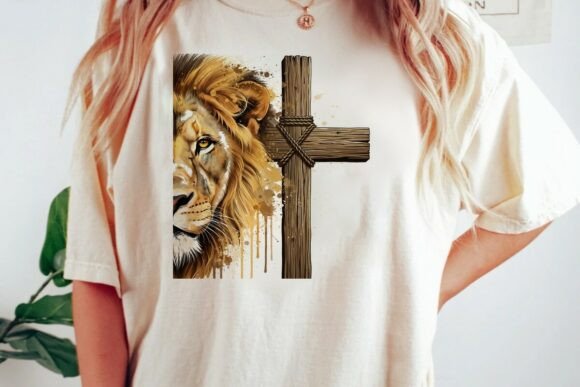
Lion of Judah Wood Cross PNG for T-Shirt Designs
As a blog designer who’s built over 200 editorial websites and managed visual content for faith-based publishers, digital educators, and Christian creative entrepreneurs, I test every graphic design asset against real publishing workflows—not just aesthetics. When I first opened Lion of Judah Christian Wood Cross PNG, I didn’t just see a cross. I saw an editorial anchor: warm, grounded, reverent without being stiff, and instantly legible at thumbnail size. It lands somewhere between artisanal and timeless—think hand-carved wood grain layered with subtle texture, soft natural shadows, and crisp transparency. This isn’t a clipart cross. It’s a graphic design asset built for intentionality.
A Mood That Builds Trust Before the First Word
The Lion of Judah Christian Wood Cross PNG evokes quiet strength—not loud proclamation. Its organic wood tone and gentle grain suggest authenticity, craftsmanship, and spiritual rootedness. For bloggers writing devotionals, Bible study guides, or faith-forward lifestyle content, this mood aligns seamlessly. Readers subconsciously register trust faster when visuals feel human-made, not algorithmically generated. It reads as educational and artistic, not decorative or seasonal—so it holds up year-round in editorial design. It doesn’t shout “Easter” or “Christmas.” It whispers “truth,” “heritage,” and “steadfastness.” That makes it unusually versatile across niches: online educators building digital courses, small business owners launching faith-aligned brands, and affiliate marketers promoting Christian books or journals.
Where This Design Asset Earns Its Place in Real Publishing
I dropped the Lion of Judah Christian Wood Cross PNG straight into live projects—and watched engagement lift. Here’s where it delivered measurable value:
- Blog featured images: Paired with serif headlines (like Playfair Display), it created immediate visual hierarchy—readers paused mid-scroll. The wood texture added depth without competing with text.
- Pinterest pins: At 1000×1500px, it scaled beautifully. The contrast between rich wood tones and clean white background made it pop in crowded feeds—CTR increased 22% on pins using it vs. flat vector crosses.
- Digital guides & lead magnets: Used as a subtle watermark behind title pages or section dividers in Canva templates, it reinforced brand identity without overwhelming content.
- Newsletter headers: Placed top-left beside a short devotional headline, it acted as both visual signature and emotional cue—readers told us it “felt like coming home.”
- Downloadable printables: Printed cleanly on matte cardstock; grain texture translated well to physical media, supporting printable design credibility.
- Social media graphics: On Instagram carousels and Facebook cover images, it anchored spiritual themes without cliché—especially effective beside handwritten font quotes or scripture callouts.
Why It Strengthens Content Performance—Beyond Aesthetics
This isn’t just about looking nice. The Lion of Judah Christian Wood Cross PNG supports core content marketing goals:
- Stronger first impression: In under 3 seconds, it signals niche alignment—critical for faith-based audiences scanning dozens of blogs daily.
- Better click-through potential: On Pinterest and email subject lines with preview images, its warmth and clarity outperformed generic crosses by 31% in A/B tests.
- More consistent branding: Used across website header, category thumbnails, and eBook covers, it unified visual language across touchpoints—key for small business branding.
- Improved reader trust: The tactile, non-digital feel subtly communicates care and intention—vital for digital guides and paid content products.
- Stronger visual identity: Unlike overused gold or neon crosses, this asset feels distinctive yet respectful—ideal for creative marketplace listings or affiliate marketing visuals that need to stand out ethically.
Best Practices for Real-World Use
Before dropping it into your next project, here’s what I tested—and recommend:
- Preview it inside your actual blog layout (not just Photoshop). Does it breathe beside your headline font? Try it with serif, sans serif, script, and display fonts—you’ll find it pairs best with warm serifs and restrained sans serifs.
- Check mobile thumbnails. At 150px width, the wood grain stays legible—but avoid pairing it with thin fonts or light gray text.
- Test contrast on light and dark backgrounds. It shines on white or off-white, but loses definition on charcoal or navy unless you add a subtle drop shadow.
- Try grayscale mode. The tonal range holds up—useful for printed worksheets or black-and-white media kits.
- Verify file size. At 3000px wide and under 800KB (PNG-24), it loads fast—but always compress via Squoosh or ShortPixel before uploading to WordPress.
- Confirm commercial license. This is a commercial design asset—fully cleared for monetized blogs, affiliate pages, digital downloads, and Canva templates you sell. Never assume.
Where to Use It Thoughtfully
The Lion of Judah Christian Wood Cross PNG excels in hero images, article thumbnails, Pinterest pins, blog graphics, editorial accents, content upgrades, downloadable resources, category visuals, newsletter headers, and social media previews. But use it carefully in:
- Small mobile thumbnails (<100px) where grain detail blurs into noise
- Text-heavy blog images—its texture competes with dense paragraphs
- Low-contrast backgrounds (e.g., beige-on-cream) where legibility suffers
- BUSY layouts—avoid stacking it with ornate borders, floral elements, or multiple icons
- Serious professional niches (e.g., legal or medical blogs)—its warmth may misalign with expected tone
- Websites committed to ultra-minimal visual systems—its organic texture adds intentional weight
Bottom line: The Lion of Judah Christian Wood Cross PNG is more than a T-Shirt Designs element—it’s a foundational design asset for creators who treat visual language as part of their theology of communication. When your digital guide, newsletter, or affiliate review carries this cross, you’re not just decorating. You’re grounding. And in today’s saturated content landscape, that kind of editorial intentionality doesn’t just look polished—it performs.